STRATEGIC PLAN
CREATION OF SURF LIFE SAVING PERU (SLSP)
Building Peru’s National Lifesaving System — From Coast to Rivers, Lakes, and Estuariese
.
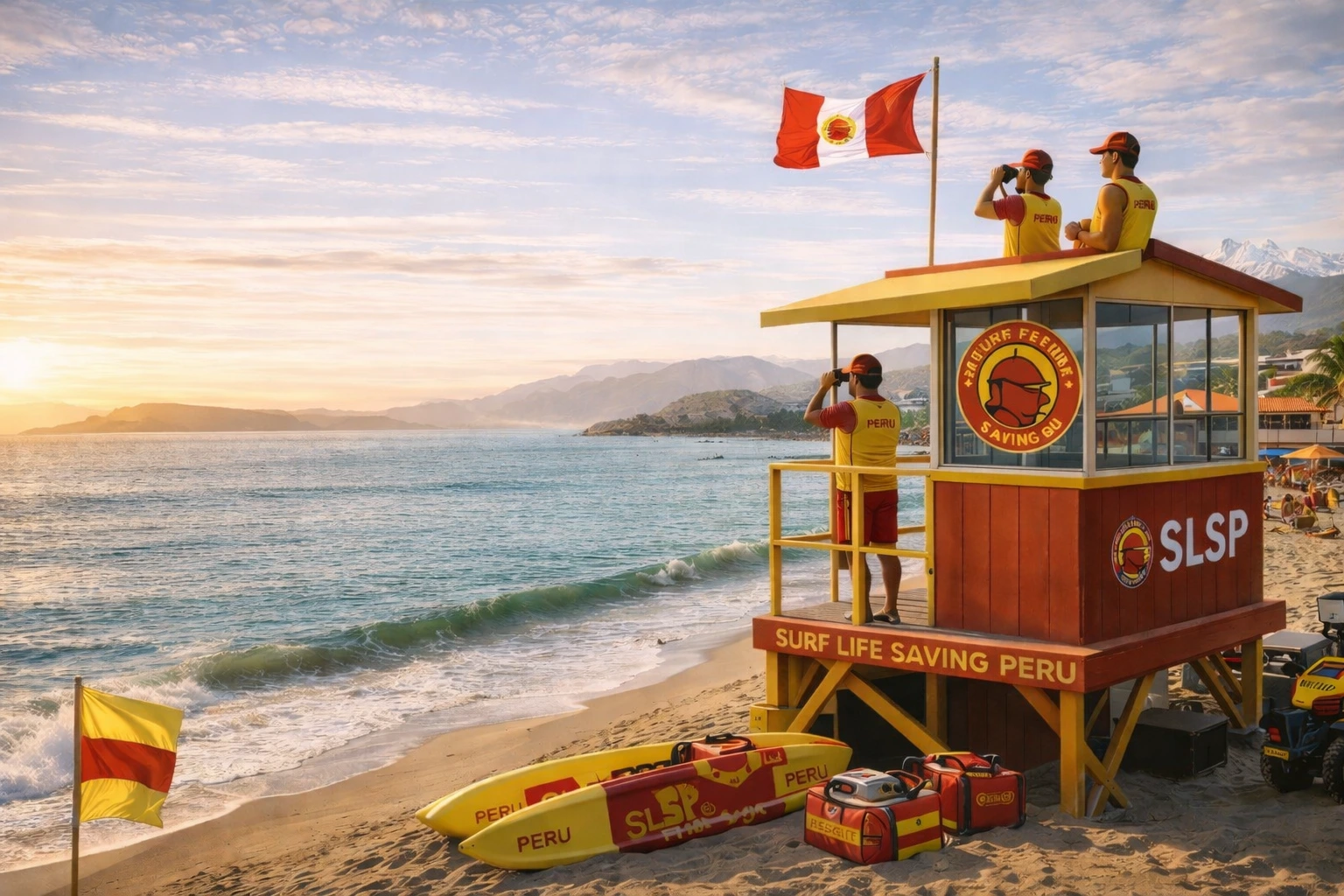
Surf Life Saving Peru (SLSP) is a strategic national initiative designed to establish a professional, scalable, and self-sustainable lifesaving association in Peru—focused on safety, rescue capability, environmental education, and community wellbeing. Inspired by the proven Surf Life Saving Australia (SLSA) model, SLSP will transform Peru’s aquatic environments into safe, sustainable, and economically productive public assets for local communities and international tourism.
This strategy is accelerated by TAYLOR APONTE GLOBAL and its subsidiary companies, which operate as an integrated investment, partnership, and sponsor-mobilisation platform—bringing international and domestic stakeholders into Peru and South America with a clear prerequisite:
Every major project must deliver measurable social benefit, with SLSP as a flagship social cause.
INSERT BUTTON BLOCK
Buttons: Explore the Strategy | Partner With SLSP | Fund a Club | Join SLSP
1
Strategic Plan
General Objective
To establish a professional and self-sustainable lifesaving association in Peru that provides safety, rescue, and environmental education across the country’s aquatic environments, inspired by the Surf Life Saving Australia model. SLSP will build a coordinated national system that increases safety, strengthens community development, and improves Peru’s positioning for sustainable tourism and responsible investment.
2
Strategic Objectives
2.1 Network of Trained Lifeguards
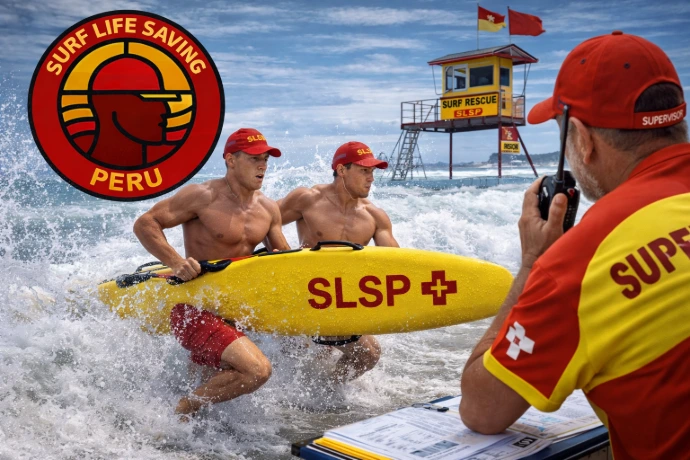
Establish trained lifesaving teams on Peru’s priority aquatic locations—organised across seven geographical zones—operating advanced rescue protocols, consistent public safety messaging, and interoperable response systems.
2.2 Infrastructure and Continuous Training
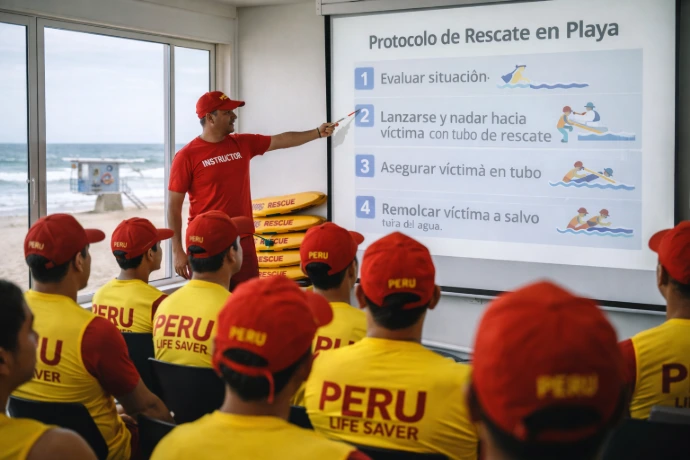
Develop operational bases and training centres (Surf Club / Beach Club model) in each zone to enable continuous training, equipment readiness, certification pathways, and community programs.
2.3 Sustainability and International Financing Model
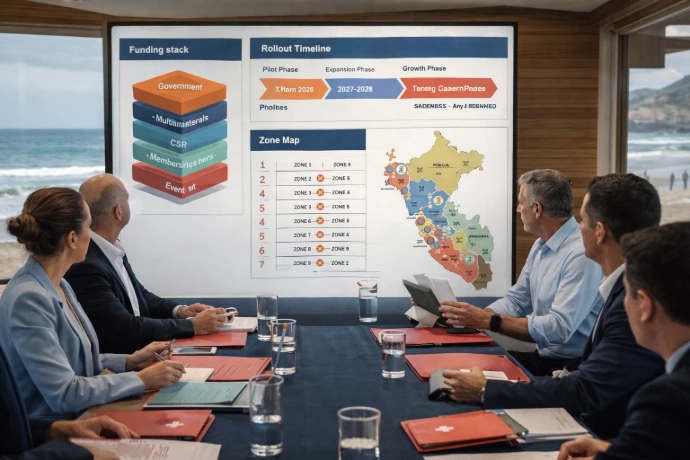
Create a financing and partnership structure capable of attracting investment from national and international institutions, corporate sponsors, tourism and sustainability organisations, and government programs—ensuring SLSP’s growth is durable, accountable, and self-sustaining.
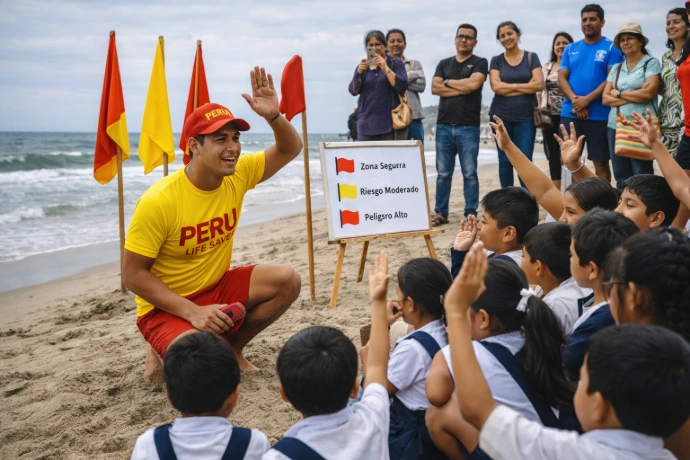
2.4 Promoting a Culture of Coastal Safety and Wellbeing
Implement community awareness and education programs across coastal and tourist communities to strengthen safety behaviour, reduce risk, promote wellbeing, and protect marine and freshwater environments.
3
Infrastructure Plan

3.1 Operational Bases and Training Centres (Seven-Zone Backbone)
Establish one operational base in each SLSP zone for operations, training, and logistics coordination.
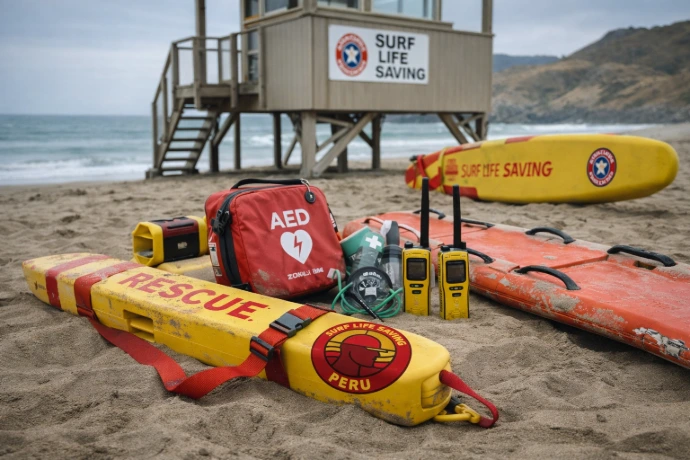
3.2 Rescue Infrastructure
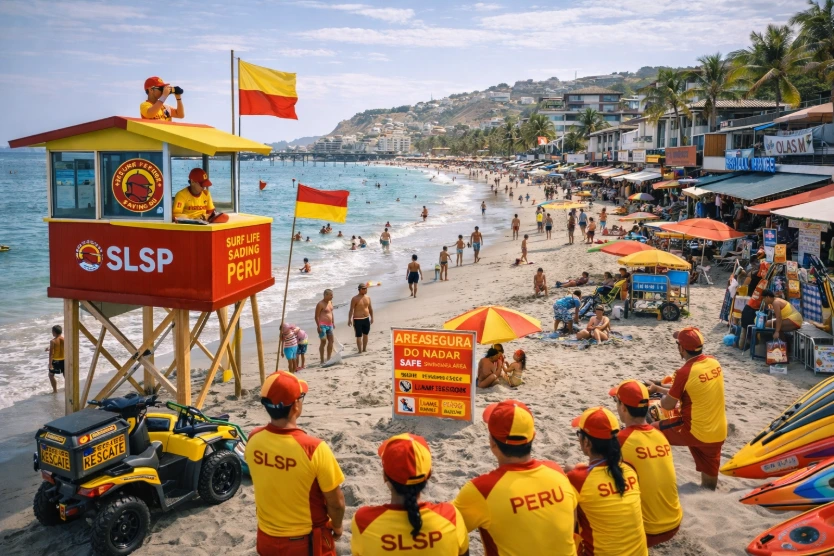
Each base includes watchtowers, rescue equipment, first aid capability, and communications systems for rapid response.
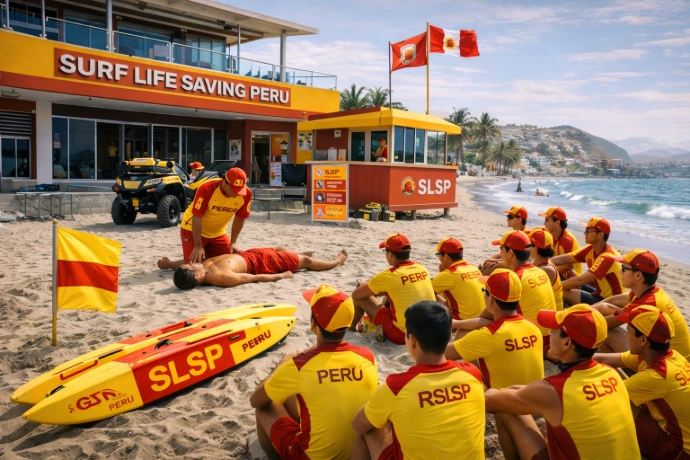
3.3 Training Centres (60 Beach Clubs National Rollout)
Develop approximately 60 “Salva Vida / Beach Clubs” as training anchors and community institutions supporting education pathways, competition, volunteer mobilisation, and local leadership.
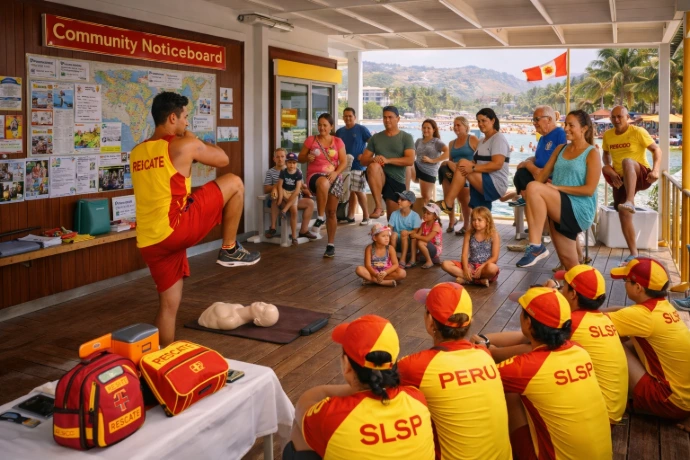
3.4 Community Wellness Centres
In partnership with sponsors and local authorities, centres provide health initiatives, recreational activities, and education programs.
4
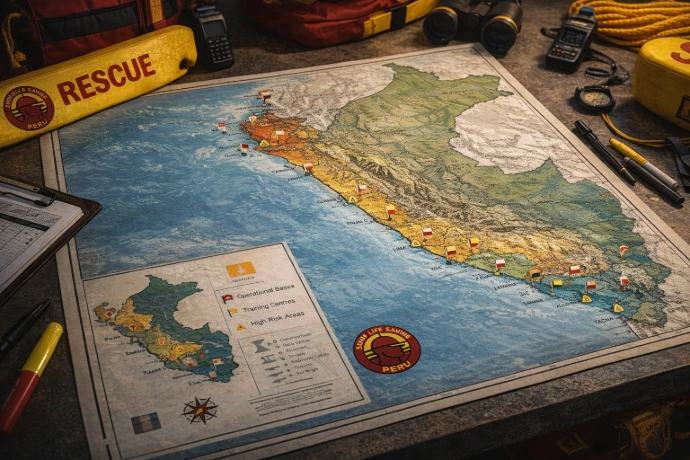
Geographic Zones and Club Rollout Model
SLSP is structured into seven zones to optimise governance, training delivery, logistics, and staged expansion.
Zona Norte – “Guardianes del Sol” (Tumbes & Piura)
Zona Centro-Norte – “Guardianes del Norte” (Lambayeque & La Libertad)
Zona Ancash – “Guardianes del Ande” (Ancash)
Zona Lima Metropolitana – “Guardianes Metropolitanos” (Lima)
Zona Sur – “Guardianes del Sur” (Ica & Cañete)
Zona Sur-Andina – “Guardianes de los Andes” (Arequipa)
Zona Fronteriza – “Guardianes de la Frontera” (Moquegua & Tacna)
5
Economic Plan
SLSP is designed to generate sustainable economic impact by improving safety, enabling destination confidence, stimulating local enterprise, and strengthening community infrastructure.
5.1 Economic Impact Projection
Increased visitor confidence and repeat tourism
Reduced cost of emergency response through prevention
Enhanced community facilities and improved public asset
5.2 Employment Generation
Direct roles: lifesavers, trainers, coordinators, admin
Indirect roles: tourism services, events, suppliers, facility operations
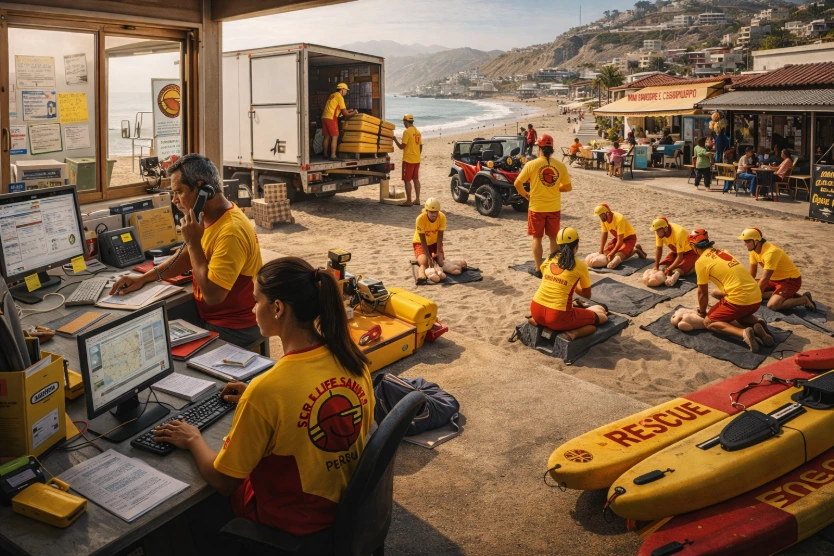
Hyper-realistic image description:
A “micro-economy” scene around a club: staff working in admin office, trainees in drills, equipment delivery arriving, local businesses operating nearby.
6
Main Income Streams
Corporate sponsorship and business partnerships
Government grants and international funds
Memberships and certifications
Events and competitions
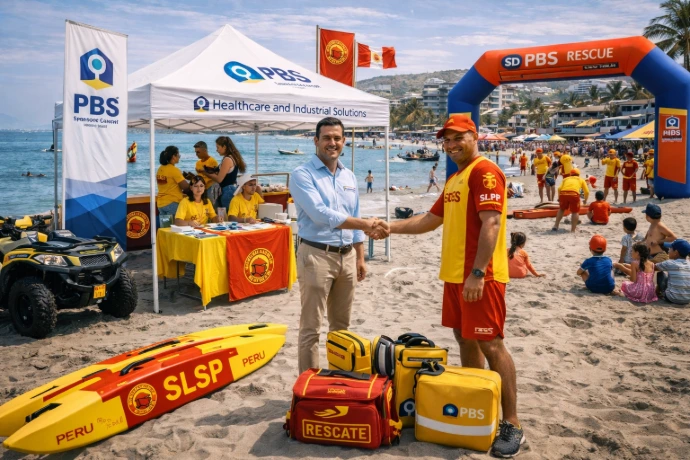
Hyper-realistic image description:
A sponsor-supported event day: registration tent, banners, lifesaving demonstrations, community participation, and a sponsor representative presenting equipment. Balanced branding; purpose-driven tone.
7
Integration with TAYLOR APONTE GLOBAL and Subsidiary Companies
A Dedicated Investor and Sponsor Mobilisation Engine for SLSP
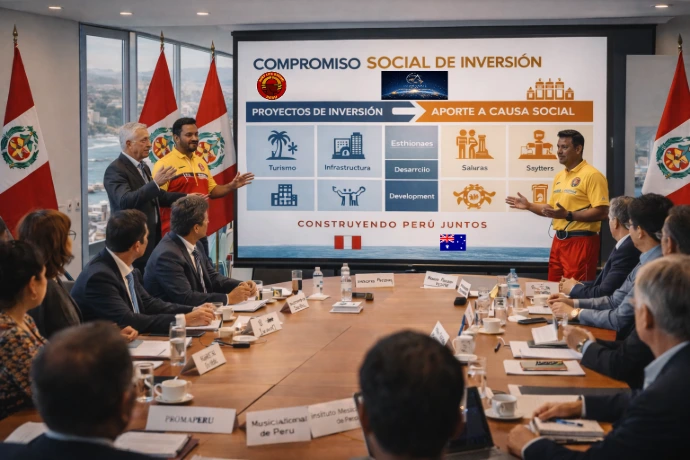
Taylor Aponte Global (TAG) and its subsidiary companies form an integral component of SLSP’s execution strategy by operating as a commercial and institutional bridge between international capital, corporate partners, and Peru’s high-impact development opportunities.
TAG’s role is to:
Source and qualify investors and strategic partners for Peru and South America
Structure projects with clear governance, measurable outcomes, and transparent reporting
Position SLSP as the primary social-impact commitment embedded within broader investment initiatives
Coordinate corporate and institutional sponsorship pipelines linked to safety, tourism, environment, youth development, and community wellbeing
This model ensures SLSP is not dependent on one funding channel. Instead, it is supported by a portfolio approach—where commercial investment in Peru is paired with a binding social commitment to lifesaving infrastructure, training, and community programs.
8
Leadership, Credibility, and Public Trust
Adam Perry Taylor — Operational Credibility and Advocacy
SLSP’s leadership and public credibility are strengthened by the profile of its President, Adam Perry Taylor—an internationally recognised open water swimmer and a committed blind activist. His lived experience navigating high-performance sport while legally blind reinforces SLSP’s core principles: discipline, resilience, inclusion, and public service.
This credibility supports SLSP in three critical ways:
Trust and legitimacy when engaging communities, sponsors, and institutions
Inclusive leadership, ensuring programs are accessible and designed for real social impact
International visibility, leveraging athletic and advocacy networks to elevate Peru’s lifesaving mission globally

9
Financial Plan
Capital Raising and Financing Strategy
9.1 International Alliances (SLSA and Global Partners)
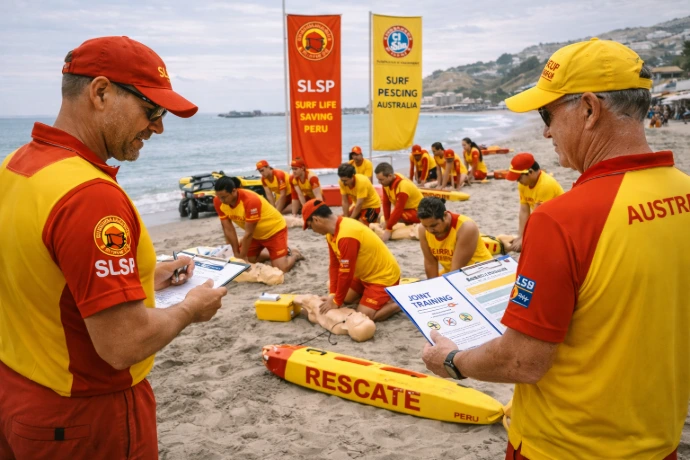
Strategic alliances support standards, mentorship, and operational uplift—accelerating national implementation capability.
9.2 The “Mangrove Strategy” (Dominant Organic Expansion)
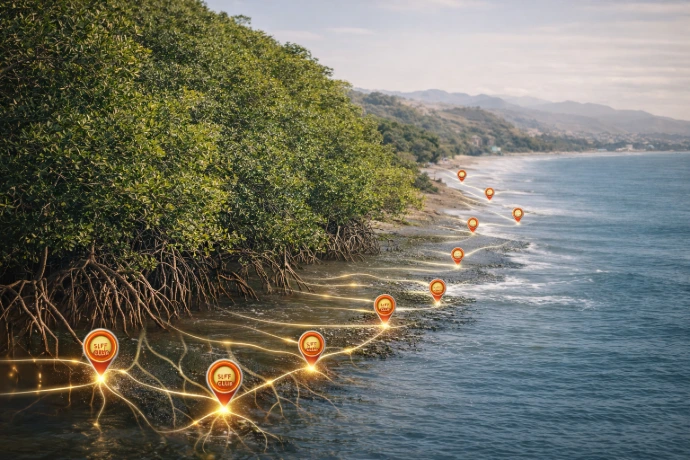
SLSP’s growth model is designed to spread organically through dense networks of clubs—creating a resilient national presence that communities and associations naturally join because it increases capability, visibility, and outcomes.
9.3 Government and Grants + Corporate Sponsorship + Crowdfunding
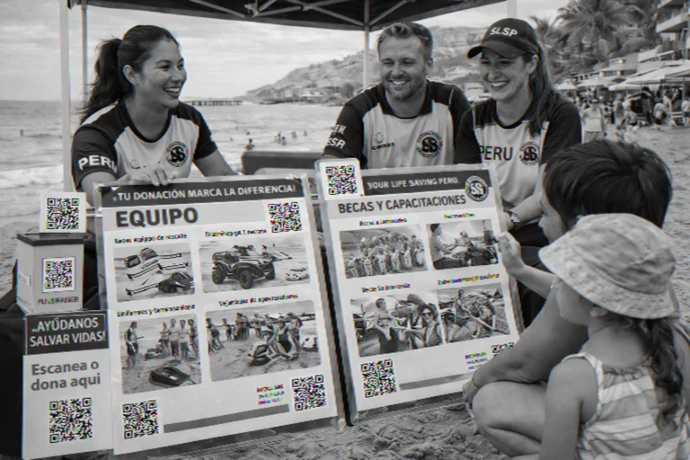
SLSP leverages a diversified funding stack:
Government safety and tourism programs
Multilateral and sustainability funds
Corporate CSR sponsorships
Community fundraising and memberships
SLSP is building a national system that saves lives, strengthens communities, and unlocks sustainable economic growth across Peru’s aquatic environments—supported by an investor mobilisation engine through Taylor Aponte Global and partners committed to measurable social impact.
INSERT BUTTON BLOCK
Buttons: Partner With SLSP | Fund a Club | Join SLSP | View the Zone Plan