The Day the Ocean Showed Her Force
29 January 2022: The Day the Ocean Took Many—and Juan Pablo Lived
Some rescues are born from accidents. Others are born from failures. 29 January 2022 was the latter.
Following the powerful earthquake in Tahiti, the Pacific shifted. The energy travelled silently across the ocean and arrived violently on the coastline of Peru, generating abnormally large and chaotic waves.
There was no tsunami alert issued by the Peruvian Navy. People were not warned. Beaches were not closed. Families, surfers, and swimmers were exposed to conditions they had no reason to expect.
That and the following 2 days, several people lost their lives along the Peruvian coast,
Juan Pablo almost became one of them.
They did not intend to go far.
Juan Pablo and two other young people entered the water casually, misjudging what lay beneath the surface. The ocean looked rough, but familiar. The waves were already breaking on the shallow sandbanks, and the whitewash was being catapulted four times higher than the massive waves themselves—a violent, vertical explosion of water that signaled something was very wrong.
The ocean was showing her force that day.
What they did not see were the underwater currents tightening like a fist, pulling without warning, without mercy. Within moments, the conditions deteriorated. The waves surged with chaotic power, and the three young swimmers were swept directly into the path of the giant waves, unable to break free from the grip of the current.
Panic replaced intention. They were in trouble.
A Scream on the Beach
Helen Aponte Saucedo was on the beach in front of her home when she heard it—a woman running toward her, screaming.
It was not confusion. It was terror.
Helen instantly understood. She turned and shouted for her husband.
Inside the house, on the second storey, he was lying on a bed in the middle of anti-inflammatory MicroCurrent therapy for his eyes. Electrodes were still attached when he heard Helen’s voice.
He did not hesitate.
He shot up from the bed, ran out over the roof, jumped from the second level, hit the ground running, and sprinted toward her.
“There are kids drowning,” Helen said.
“Where?”
“About 200 meters down the beach.”
Running Blind Toward the Crowd
He ran as hard and as fast as he could toward a growing crowd gathered near the shoreline. He could make out shapes—people pointing, shouting, gesturing wildly toward the water.
He did not stop to assess.
He entered the ocean at speed, launching nearly ten meters into the outgoing current, using the force of the water and the brief submersion to recover his breath from the sprint.
He surfaced directly into the chaos of the break.
Two Lives Back—One Still Missing
He reached the zone of violent whitewater, where two young men were fighting to stay afloat. He intercepted them, positioned them, and guided them to safety.
They survived because help arrived in time.
“There’s one more,” they shouted.
“Where?” he yelled back.
They pointed frantically—toward deeper water—where Juan Pablo had been dragged out, still fighting with everything he had left against the pull of the current.
“I can’t see,” he responded. “Point me in the direction.”
They did.
He turned his body in that direction and went—placing absolute trust in training, instinct, and movement, not sight.
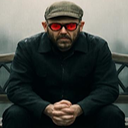
This Was Adam Perry Taylor
Now, the President of Surf Life Saving Peru
Adam is legally blind. He could not see Juan Pablo.
What he could see—barely—were violent flashes of white water, glimpsed only from the corner of his eye. Explosions of spray. Movement without shape.
“I couldn’t see him,” Adam later explained. “I could only see white water exploding—movement. I swam toward the splashing. Then I couldn’t see it anymore.”
That was the moment Juan Pablo slipped beneath the surface.
Finding What the Eye Cannot
By the time Adam reached him, Juan Pablo had already taken his last breath.
He was sinking.
Adam dove blindly into the turbulence, reaching down approximately one meter below the surface, searching not with vision, but with memory, instinct, and experience forged over a decade of elite training.
He found him.
Ten Minutes Between Life and Death
Adam pulled Juan Pablo to the surface, turned him over, and forced water from his lungs.
Then began the swim. One arm locked under Juan Pablo’s armpit.
One hand supporting his jaw to keep the airway clear.
For ten minutes, Adam swam toward shore.
For eight of those minutes, he waited—reading the ocean, timing her rhythm.
The waves were enormous. The white spray rose four to five times higher than the already massive waves. The force was absolute. Entering the surf zone at the wrong moment would have killed them both.
Finally, Adam committed.
“I positioned myself next to him in the surf zone and grabbed the back of a massive wave. It carried us to shore.”
The Second Rescue Began on the Sand
Adam reached the beach carrying Juan Pablo in his arms.
He handed him immediately to his wife, Helen Aponte Saucedo—a licensed physician and lawyer.
Helen began CPR and emergency stabilization on the sand.
Only then—after the rescue was complete—did lifeguards appear.
One extended his arms.
“We’ll take care of him from here.”
Juan Pablo’s mother screamed. She begged them not to touch her son.
She trusted only Adam and Helen.
When Survival Is Not Enough
Helen accompanied Juan Pablo in the ambulance.
At the public hospital, they were turned away. Juan Pablo was pronounced dead without examination, assumed to have excessive fluid in his lungs. They left.
At a private clinic, there were no doctors.
Desperate, Helen asked permission to rent the facilities so she could stabilize Juan Pablo herself and drain the fluid from his lungs to prevent meningitis.
They agreed.
Three hours later, an ambulance was needed to take him to a regional hospital in Piura.
The cost crushed the room. Helen looked toward Adam and he could feel what she was thinking. He squeezed Helen’s hand.
“We’ll pay.”
He emptied their bank account. When staff realized a foreigner was paying, charges escalated.
They even attempted to bill Helen for her medical time. Adam paid everything—because delays kill.
Despite this, Juan Pablo was not taken to Piura.
He was left at the door of a second-rate clinic in Talara.
The family paid again.
This is the Reality of the Health System - at least in the North of Peru.
Witnesses, Cameras—and Silence
Walking back along the beach, Adam passed dozens of people filming.
Not a single video was ever published.
If Juan Pablo had died, the footage would have flooded social media.
No one thanked him. No one congratulated him.
Instead, there was suspicion. “How were you able to save him when no one else dared?”
“I’ve been trained,” Adam replied—referring to fifteen years of surf lifesaving training under the guidance of his father, who never missed a session.
Then the final question:
“If the surf was so dangerous that no one else went in… how did you do it?”
Adam answered simply: “You can’t be afraid of what you can’t see.”
This is the Reality of the Mentality of the People - At least here in the North.
More than 60 people on the beach with their phones out recording, but nothing was published - because Juan Pablo LIVED.
Had he Died, it would have been all over Social Media.
But Adam and Helen did not act for Social Media fame, they have done it many times without anyone else on the beach, and continue doing so.
It is not for the Recognition, it is for the Gratification.
Why This Story Matters Now
We remember this rescue as communities once again face tsunami warnings, extreme ocean events, and systemic failures in coastal safety.
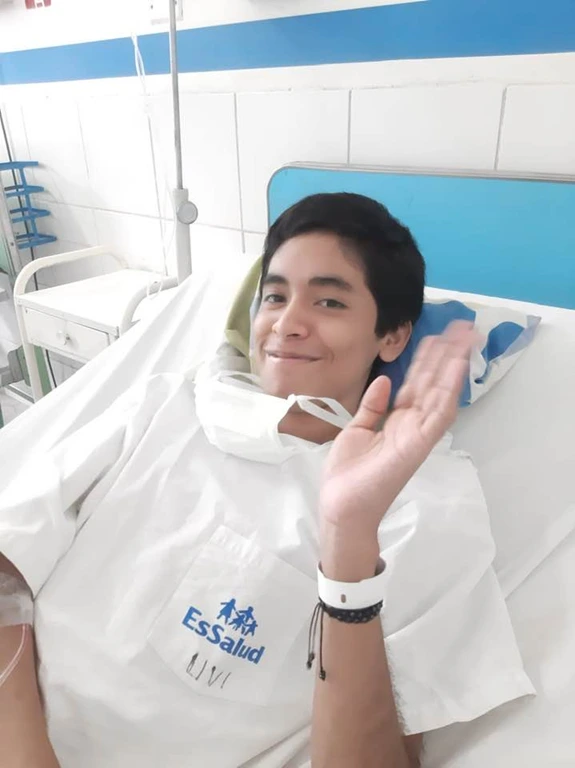
Juan Pablo lived, and is now at University Studying in Piura.
Not because the system worked—but because one trained, disciplined individual acted when others could not.
This is why Surf Life Saving Peru exists.
So that next time:
Warnings are issued
Beaches are protected
Rescues do not depend on a single person
And no family has to beg for competent care after surviving the ocean
Adam does not remember the rescue itself. From the moment he entered the water until Juan Pablo was in Helen’s arms, his body acted automatically—to save, to protect.
He lives with chronic PTSD. He chooses to see it not as a weakness, but as a responsibility—earned through seventeen years of living in fight-or-flight, without once choosing to flee.
As they walked home that day, their children ran across the sand, proud.
For that moment—for those children—he would enter waves of any size again.