SLSP Environmental Plan and Focus
A Proven Model for National Lifesaving Excellence
.
Surf Life Saving Peru (SLSP) recognises that environmental degradation and water safety are inseparably linked. Polluted beaches, rivers, and estuaries not only damage ecosystems but directly increase risks to human health, tourism, fisheries, and coastal livelihoods.
SLSP’s environmental focus is designed to operate in parallel with lifesaving operations, combining prevention, monitoring, community engagement, and inter-institutional collaboration to support the long-term recovery and protection of Peru’s aquatic environments.
1
Environmental Context: Polluted Coastal Areas in Peru
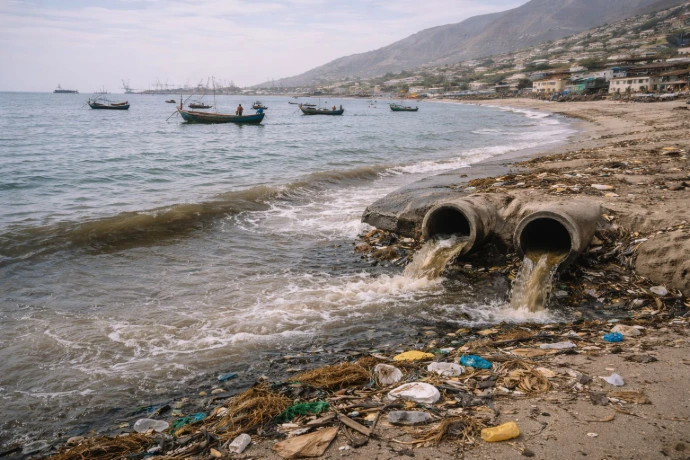
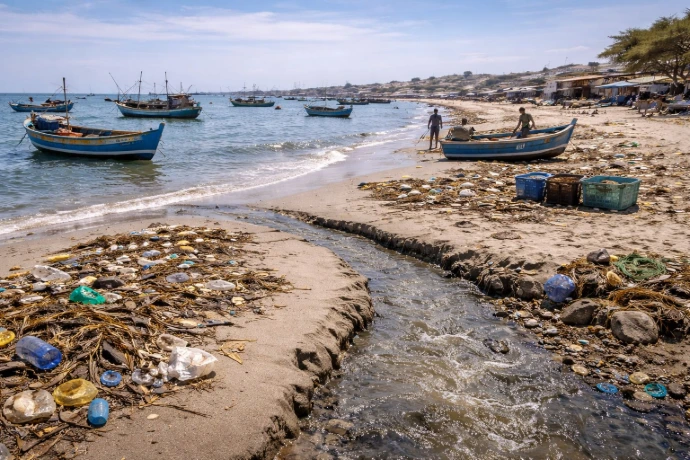
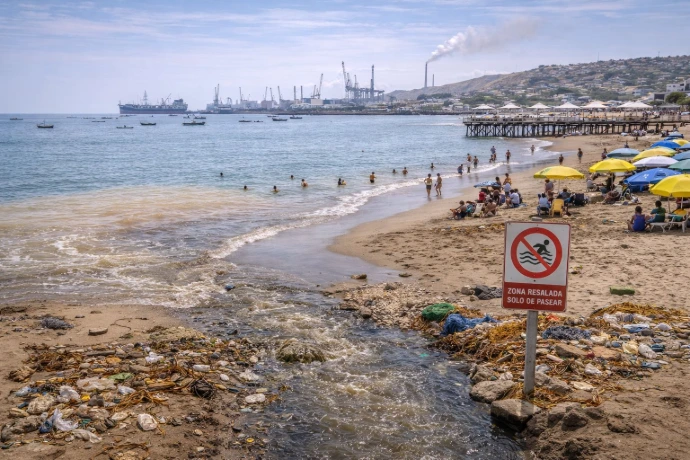
Multiple beaches along the Peruvian coast have been identified as polluted or uninhabitable due to untreated wastewater discharge, industrial effluents, solid waste accumulation, and port-related contamination. These conditions pose serious risks to public health, marine ecosystems, and economic activity.
SLSP uses this data as a risk-prioritisation tool, guiding decisions on patrol deployment, environmental intervention, and community education.
2
Identified Polluted Beaches by Region
Piura Region
Colán Beach (Paita Province, Colán District)
Impacted by untreated wastewater discharge and urban-industrial effluents.
Parachique Beach (Sechura Province, Sechura District)
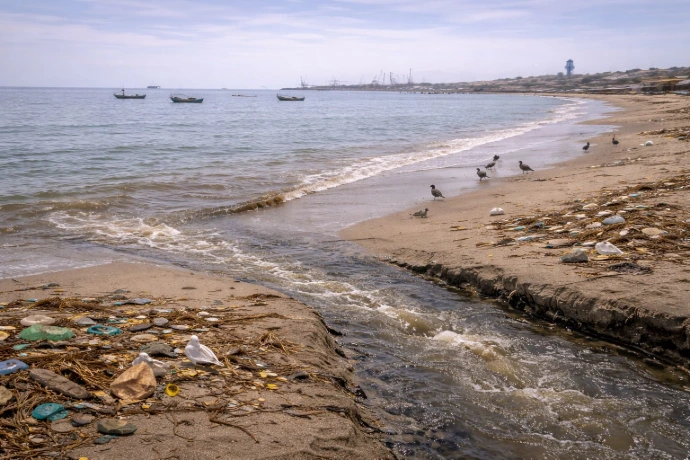
Affected by solid waste accumulation and untreated effluents linked to fishing and shellfish activity.
3
Lambayeque Region
Santa Rosa Beach (Chiclayo Province, Santa Rosa District)
Contaminated by direct sewage discharge, resulting in odours and marine ecosystem damage.
Puerto Eten Beach (Chiclayo Province, Eten District)
Affected by industrial waste and untreated sewage impacting water quality.
4
La Libertad Region
Huanchaco Beach (Trujillo Province, Huanchaco District)
Solid waste and sewage contamination linked to tourism and urban growth.
Buenos Aires Beach (Víctor Larco Herrera District)
High bacterial contamination from untreated wastewater, unsafe for bathing.
Las Delicias Beach (Moche District)
Urban sewage directly discharged into the ocean.
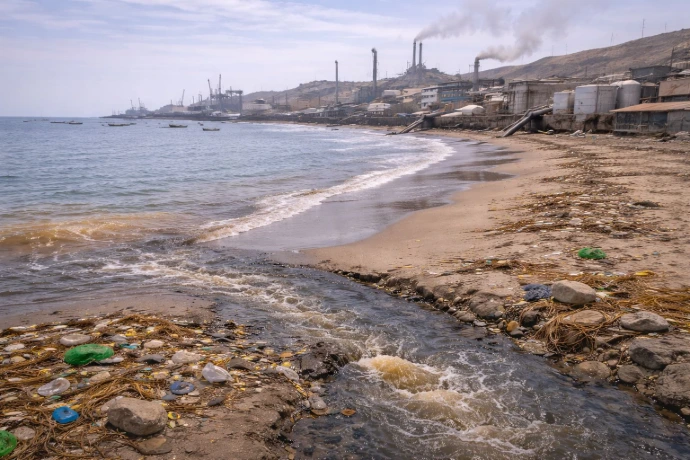
Salaverry Beach (Salaverry District)
Industrial and port-related chemical and bacterial contamination.
5
Ancash Region
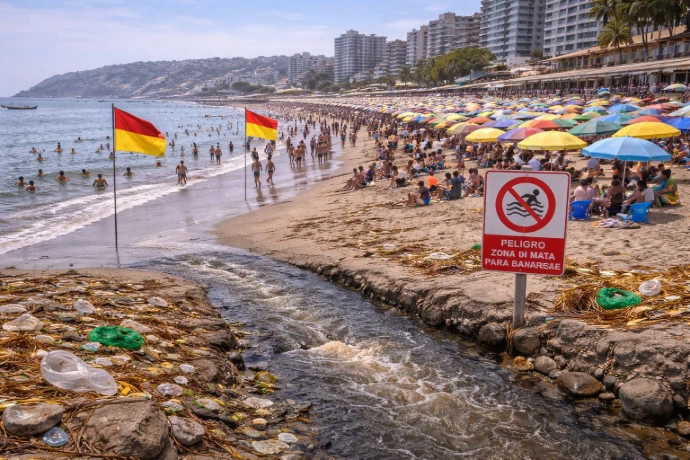
Vesique Beach (Chimbote District)
Industrial pollution from fishing plants and inadequate wastewater treatment.
Atahualpa Beach (Nuevo Chimbote District)
Chemical waste contamination linked to factories and fisheries.
6
Lima Region
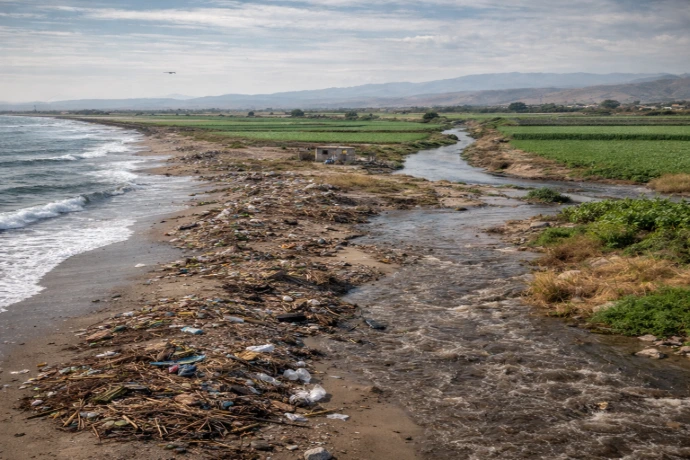
Agua Dulce Beach (Chorrillos District)
Periodic bacterial contamination due to insufficient sanitation infrastructure.
Playa Pescadores (Chorrillos District)
Sewage discharge and accumulated trash affecting recreational safety.
7
Ica Region
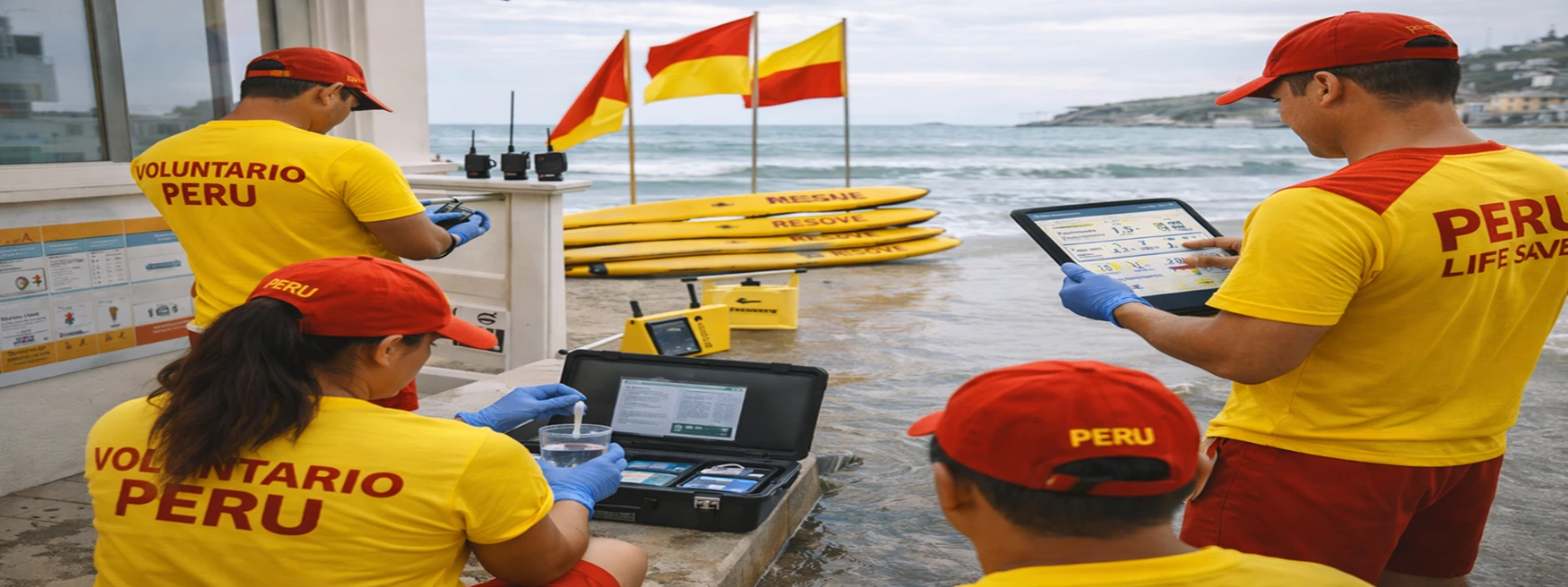
Tambo de Mora Beach (Chincha Province, Tambo de Mora District)
Polluted by sewage, solid waste, and agricultural and chemical runoff.
8
SLSP Environmental Objectives
SLSP’s environmental plan focuses on risk reduction, recovery support, and prevention, aligned with public safety and sustainable development.
Core Environmental Objectives
Reduce health risks caused by polluted water
Support the recovery of degraded beaches and coastal ecosystems
Improve safety outcomes through environmental monitoring
Promote responsible use of coastal and marine resources
Environmental Action Programs
9
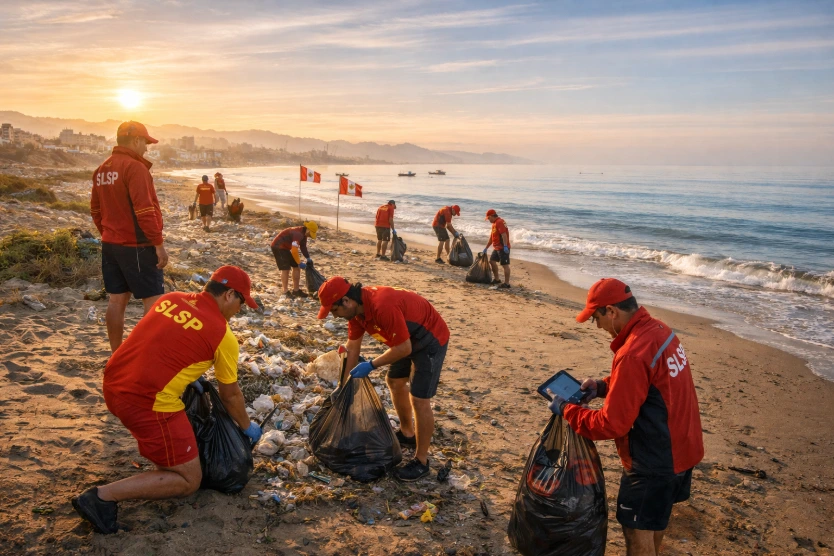
Beach, River, and Estuary Clean-Ups
Regular clean-up operations conducted with communities, NGOs, and local authorities to remove solid waste and restore safer environments.
10
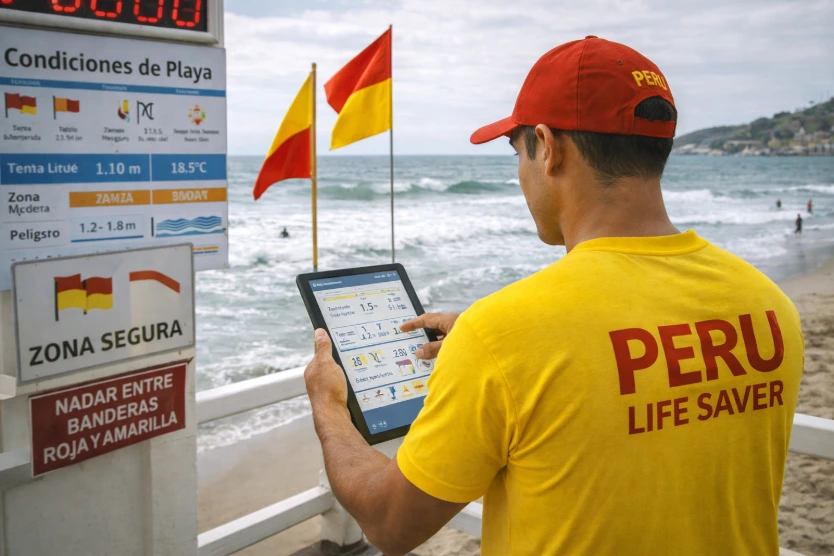
Environmental Monitoring and Reporting
SLSP supports ongoing monitoring of water conditions, visible pollution, and risk factors, sharing information with relevant authorities to support remediation and enforcement.
10
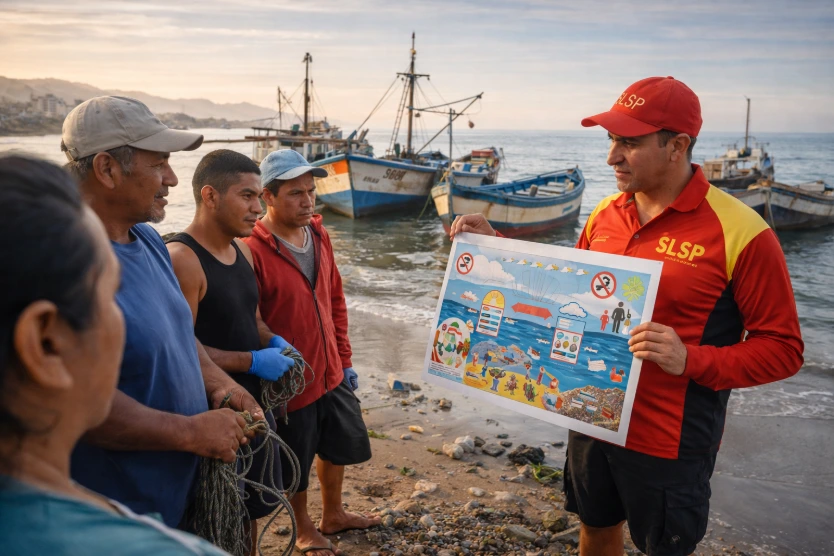
Community Environmental Education
Educational campaigns targeting schools, fishing communities, tourism operators, and visitors to promote responsible behaviour and environmental awareness.
Integration with Public Institutions and NGOs
12
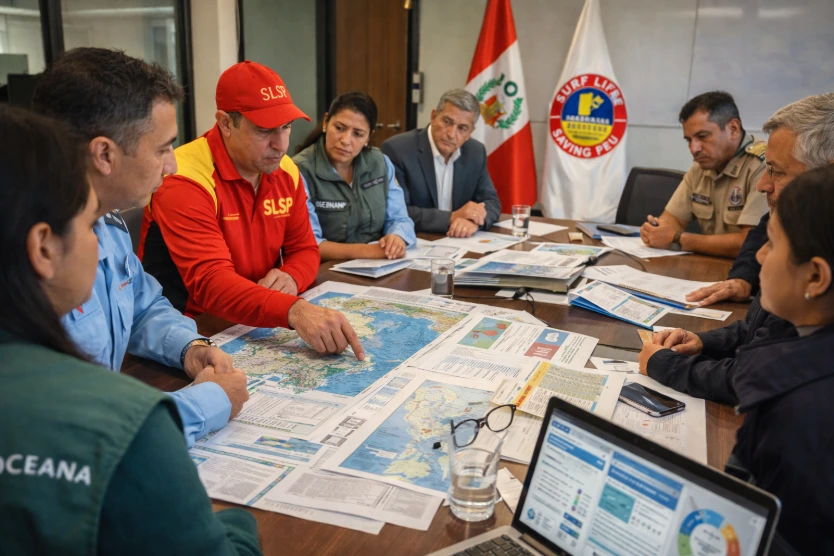
SLSP works in coordination with environmental and maritime authorities, including:
MINAM
SERNANP
IMARPE
SPDA
Oceana Perú
Regional and Municipal Governments
This coordination ensures that lifesaving, environmental protection, and policy action reinforce each other, rather than operating in isolation.
Socio-Economic Justification

13
International studies on Surf Life Saving Australia demonstrate that environmental protection and water safety generate significant socio-economic returns, including:
Reduced public health costs
Lower emergency response expenditure
Increased tourism confidence
Improved community wellbeing
SLSP adopts this integrated approach to ensure environmental action is economically defensible, socially beneficial, and operationally sustainable.
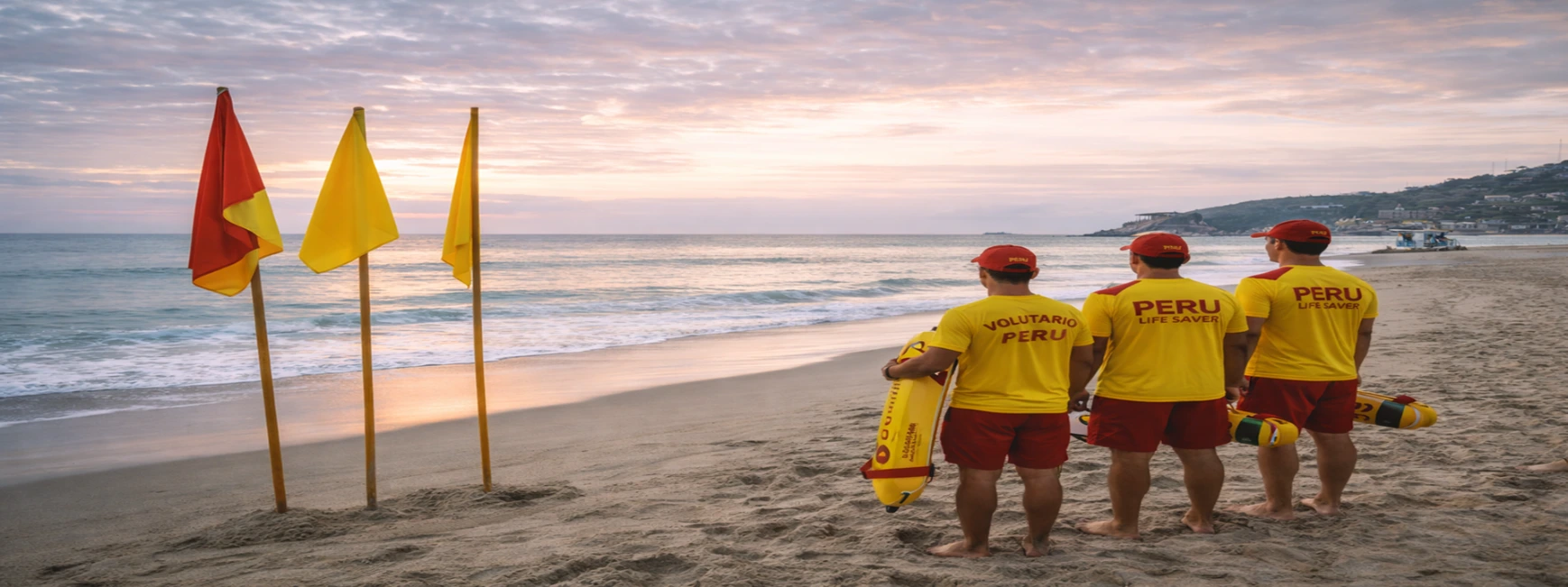
SLSP’s environmental plan is not separate from its lifesaving mission—it is fundamental to it.
By addressing pollution, supporting recovery, and promoting responsible coastal use, SLSP strengthens:
- Public safety
- Environmental sustainability
- Community health
- Economic resilience
Through evidence-based action and collaboration, SLSP contributes to a future where Peru’s beaches are safer, cleaner, and capable of supporting thriving communities and ecosystems.
Reference Note:
Socio-Economic Reports and Impact Studies from Surf Life Saving Australia are referenced as comparative benchmarks demonstrating the measurable public value of integrated lifesaving and environmental systems.